

 UK
UK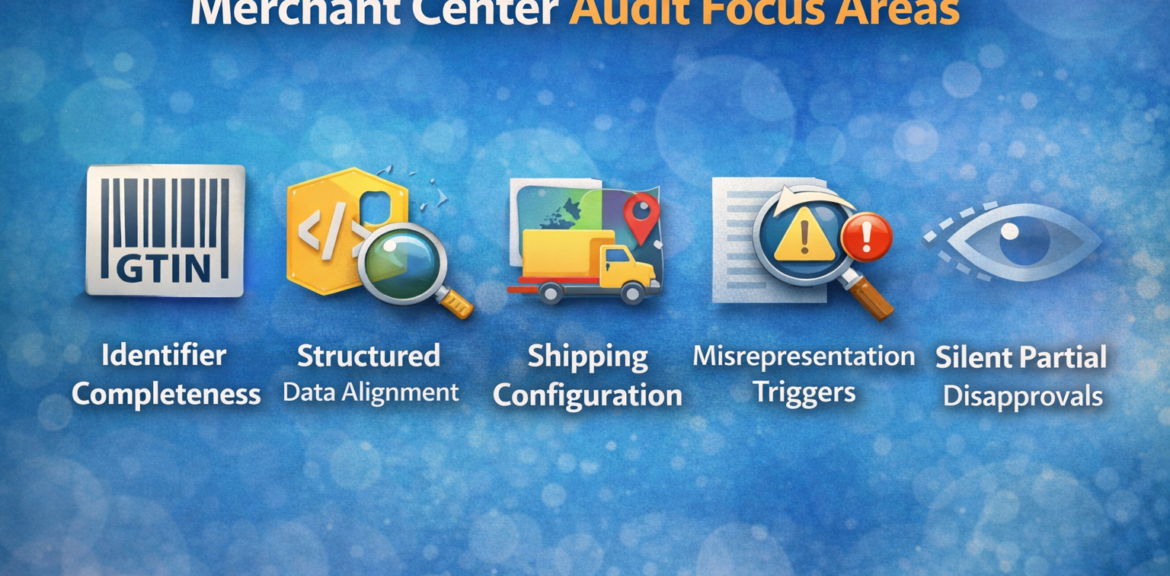

If you’re the Head of Marketing for a retail brand, and your best-selling or highest-margin products aren’t appearing in Google Shopping, I can tell you from experience: this is rarely a bidding issue.
It’s almost always a Merchant Center health issue.
In 2026, with Google Merchant Center Next reshaping how feeds, shipping signals, structured data and diagnostics interact, the difference between strong Shopping performance and invisible inventory often comes down to what we call silent eligibility blockers.
These don’t show up as obvious red warnings.
They quietly suppress performance.
This article explains exactly what we audit when we run a GMC diagnostic audit, what has changed in the 2026 Merchant Center Next updates, and how to fix the most common causes of Merchant Center disapprovals affecting retailers today.
The uncomfortable truth: most “Google Shopping performance problems” are feed eligibility problems
When a brand tells me:
“Our Google Shopping products are not showing”
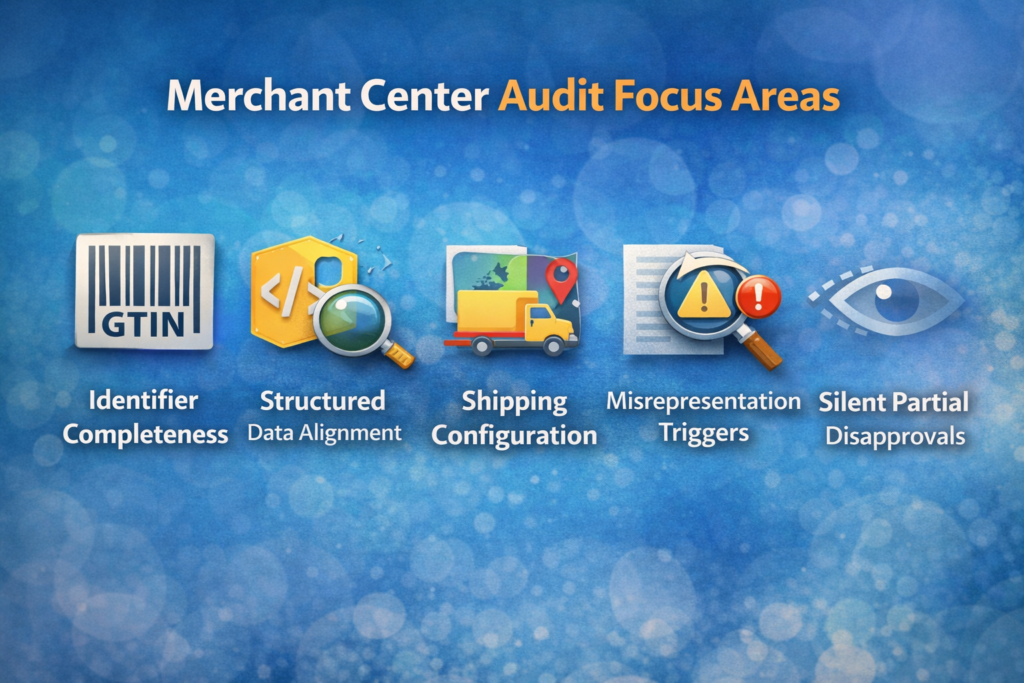
We immediately check five areas before touching campaigns:
- Identifier completeness
- Structured data alignment
- Shipping configuration
- Misrepresentation triggers
- Silent partial disapprovals
Because Performance Max and Shopping campaigns cannot optimise what they cannot serve.
What Merchant Center misapprovals actually look like in 2026
The biggest misconception I see is this:
Retail teams think misapprovals are obvious.
They aren’t anymore.
In Merchant Center Next, eligibility problems now appear as:
- partial visibility loss
- suppressed auction participation
- region-level serving restrictions
- delivery speed penalties
- price trust downgrades
- structured data mismatches
- identifier confidence issues
In short:
Your products may be approved but not competitive enough to serve.
That distinction matters.
Why your best products disappear first (not your worst ones)
Counter-intuitively, your strongest SKUs are the most sensitive to feed problems.
Why?
Because they compete in the most aggressive auctions.
Which means even small issues like:
- missing GTINs
- slow delivery signals
- inaccurate shipping tables
- price mismatch warnings
- weak product titles
push them out of eligibility tiers faster.
So when your hero products vanish from Shopping placements, I treat that as a diagnostic signal — not a coincidence.
The #1 cause of Merchant Center disapprovals: Missing identifiers Google Shopping
Still the biggest performance blocker in retail feeds.
If your catalogue includes:
- branded electronics
- appliances
- homeware
- furniture
- cycling equipment
- sports gear
- toys
- beauty
- hardware
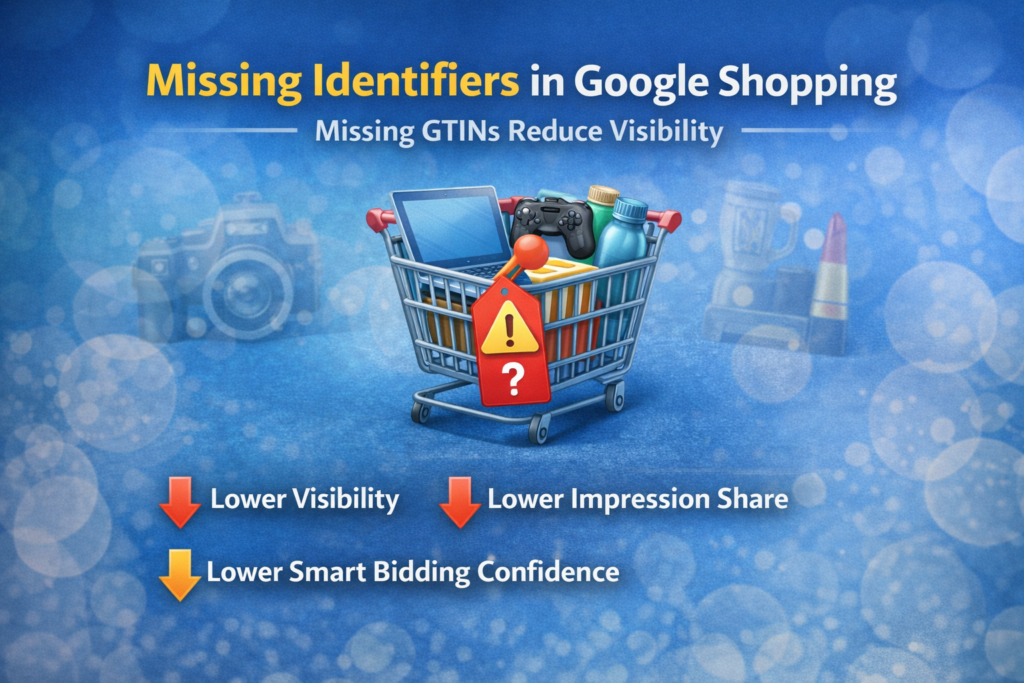
then GTIN completeness directly affects auction eligibility confidence.
When identifiers are missing:
Google reduces trust in the product match quality.
Result:
lower visibility
lower impression share
lower Smart Bidding signal confidence
reduced discovery eligibility
Even if products remain technically approved.
During a typical audit, improving identifier coverage alone lifts Shopping traffic by 15–40% without increasing spend.
The silent killer: Google Shopping shipping settings error
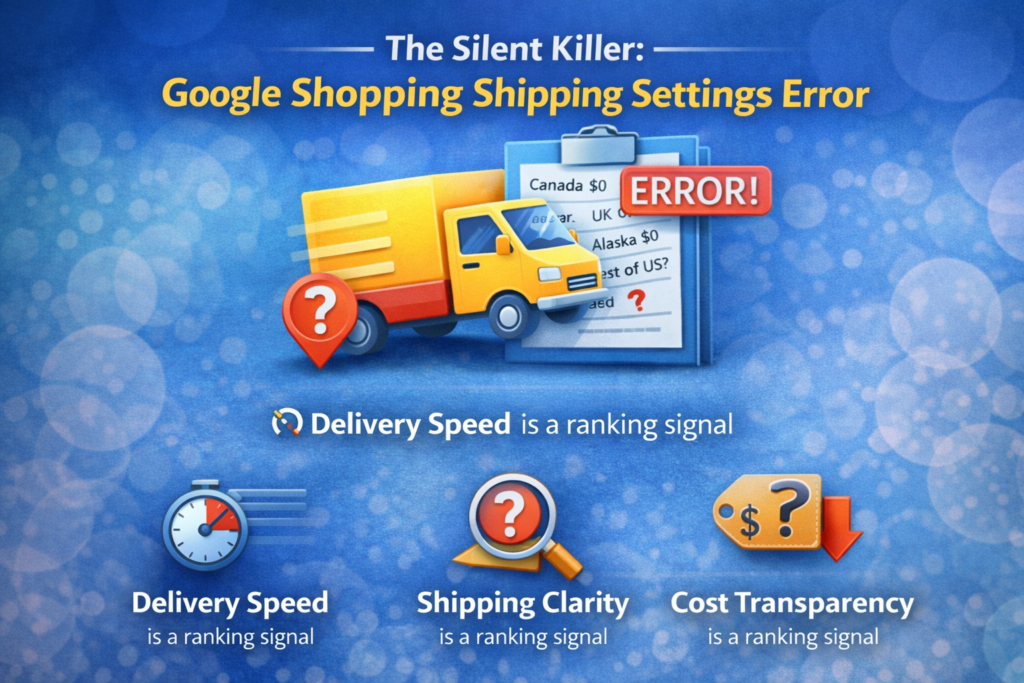
Shipping signals now influence ranking more than most teams realise.
In Merchant Center Next:
delivery speed is a ranking signal
shipping clarity is a ranking signal
cost transparency is a ranking signal
Common issues I regularly fix:
- fallback shipping rules overriding category rules
- incorrect regional delivery tables
- missing delivery estimates
- mismatch between site messaging and GMC
- incorrect handling times
- shipping not configured for free-shipping thresholds
A simple Google Shopping shipping settings error can quietly suppress entire product ranges across markets.
And because these are rarely flagged as disapprovals, they often go unnoticed.
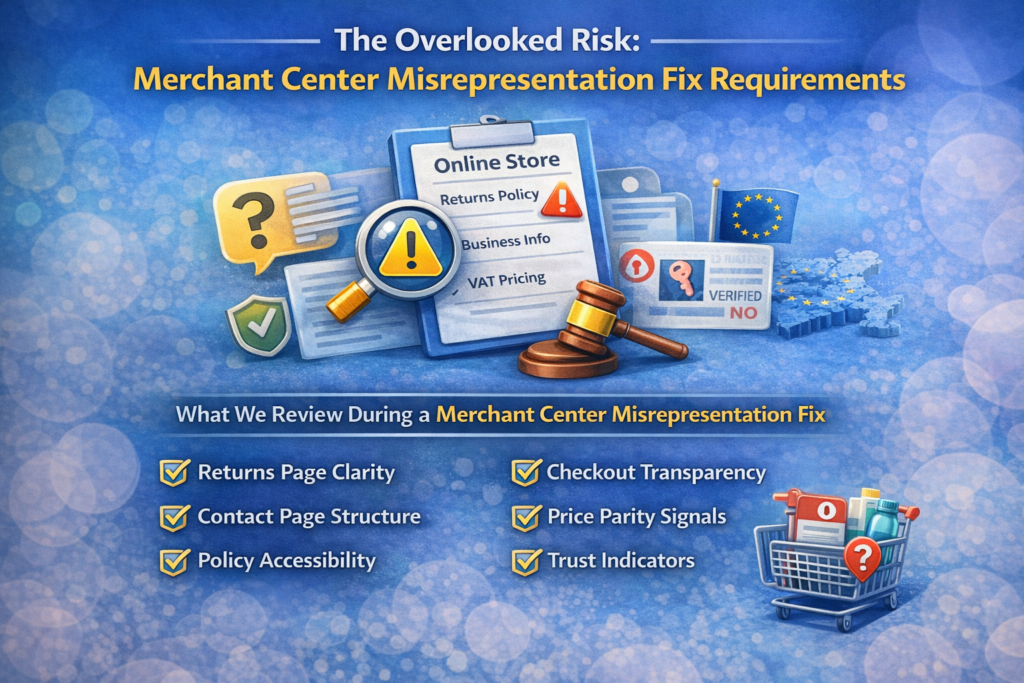
The overlooked risk: Merchant Center misrepresentation fix requirements
Misrepresentation warnings are increasing across EU retail accounts in 2026.
Triggers include:
- unclear returns policies
- inconsistent delivery messaging
- VAT ambiguity
- missing business verification signals
- structured data conflicts
- price mismatch across variants
These don’t always suspend accounts immediately.
Instead they:
reduce auction eligibility confidence
limit scaling capacity
trigger regional restrictions
When I perform a Merchant Center misrepresentation fix, I review:
returns page clarity
contact page structure
policy accessibility
checkout transparency
price parity signals
brand trust indicators
Because Merchant Center now behaves much closer to a trust engine than a feed validator.
Structured data mismatches now affect eligibility more than feed errors
Merchant Center Next increasingly cross-checks:
feed
site schema
landing page
checkout signals
If those disagree:
eligibility weakens.
Example mismatches I regularly detect:
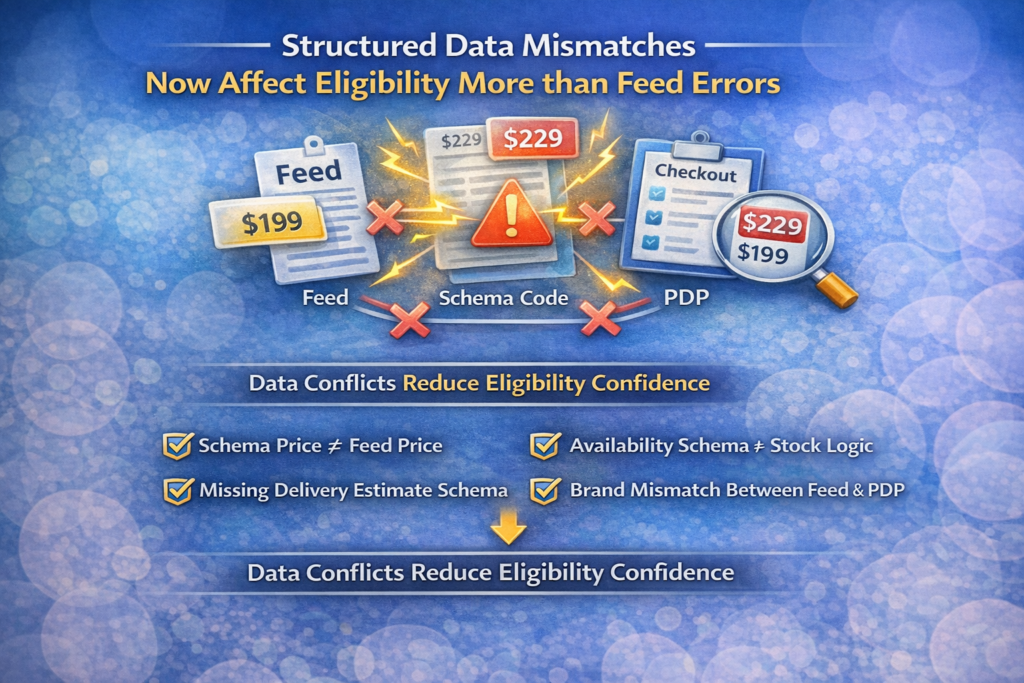
schema price ≠ feed price
availability schema ≠ stock logic
delivery estimate schema missing
brand mismatch between feed and product detail page
These rarely appear as traditional warnings.
They appear as performance ceilings.
Why your Google Shopping products are not showing (the real checklist I use)
When I run a GMC diagnostic audit, this is the exact sequence I follow.
Step 1: Identifier coverage audit
Check:
GTIN coverage
MPN fallback usage
brand completeness
Priority score assigned per category.
Step 2: Structured data parity review
Compare:
schema vs feed
schema vs PDP
schema vs checkout
Resolve conflicts immediately.
Step 3: Shipping signal alignment
Validate:
delivery speed
region logic
threshold logic
fallback rules
Correct any shipping hierarchy conflicts.
Step 4: Silent diagnostics review
Merchant Center Next diagnostics now include:
image quality warnings
price competitiveness signals
landing page latency issues
policy accessibility flags
These influence auction competitiveness.
Not just approval status.
Step 5: Variant-level eligibility review
Variant suppression is extremely common.
Especially across:
sizes
colours
bundles
regional SKUs
Fixing this alone often unlocks hidden revenue.
The 2026 Merchant Center Next updates retailers still haven’t adapted to
Most teams are still operating with a 2022 mental model of Merchant Center.
Here’s what changed.
Merchant Center is now signal-driven, not feed-driven
Eligibility comes from:
feed
schema
shipping
site trust
delivery transparency
policy clarity
Not just product uploads.
Diagnostics are now predictive, not reactive
Warnings increasingly indicate:
future eligibility risk
—not current disapproval.
Retailers who act early outperform consistently.
Shipping is now a ranking factor
Fast delivery improves:
CTR
conversion rate
auction visibility
Even when price stays identical.
Structured data now validates feed truth
Schema inconsistencies weaken trust.
Trust affects visibility.
Visibility affects revenue.
How I typically recover visibility for suppressed products
When I fix Merchant Center misapprovals for retailers, results usually come from:
identifier completion
shipping clarity improvements
structured data alignment
policy trust strengthening
variant eligibility fixes
Not campaign changes.
Campaign optimisation only works after eligibility is restored.
What I recommend you do next as a Head of Marketing or retail business owner
If your:
Google Shopping products are not showing
Performance Max plateaued
impression share dropped
best sellers disappeared
CPC rose unexpectedly
then I would prioritise a Merchant Center health audit before adjusting budgets.
Because in 2026:
Merchant Center health is Shopping performance.
Not a supporting factor.
The brands scaling fastest right now aren’t bidding smarter.
They’re feeding Google better signals.